Feel You've Lost Sight of Who You Are After the Hard Years?
On what a hard stretch really changes, and what it doesn't.
She arrived at our session with something heavy on her mind. Weighty in fact.
She'd been thinking about the woman she was before her illness.
Before the years of fitting a big job around a busy household.
While trying to go through a gruelling treatment schedule.
Then, as we talked, we returned to the values she'd shared in our very first sessions, long before any of it.
It caught her completely off guard.
What mattered to her then, her core values, was exactly what mattered to her now.
"That version of me wasn't a different person," she realised.
"After my illness, I'd built this whole story that she was completely different to who I am now. But mercifully, I'm still her, if not even more grounded than before! With my priorities clearer than ever!"
The story we tell ourselves about who we used to be
Over the difficult years, she'd come to believe that the woman she'd been before was someone else entirely.
Not someone she disliked, exactly.
"Demonising is far too strong a word," she said.
More someone she'd left behind.
A hard-working version of herself she'd quietly written off, as no longer being relevant to who she was now.
It's a surprisingly common story among the senior women I work with.
After a hard stretch, whether an illness, a redundancy, caring for a parent, or years of carrying a household alongside a demanding role, we look back at our earlier self sometimes with wonder, sometimes with a painful wince.
We assume the struggle must have changed us at our core.
That earlier version of ourselves, and what we loved, whoever she was, couldn't possibly still be us!
What she actually heard
But hearing her own words from years before, she recognised the same person.
The same values. The same humour. The same things that mattered most to her.
What had changed was the details around the edges.
How she organised her days. How she fitted work around family. How she squared a circle that kept expanding.
"The core of who I am has never shifted," she told me. "Those are just the peripherals."
And the word she used for how that felt?
Gratifying.
Then, a moment later, a better one.
Relief.
I watched it land.
Her face softened into a small smile she didn't even know she was making.
Losing sight isn't the same as losing yourself
She put it far better than I or anyone else could.
When your life fills up with other people's needs, you don't stop being you.
You just lose sight of yourself for a while.
Strangely, she said, her illness had given her a 'reset button'.
For a time she couldn't focus on anything except getting well.
So she handed over responsibility for everything, right down to the Christmas lunch, which her husband strategically sourced from Marks & Spencer.
Job done.
As she recovered, she had a choice about what exactly to pick up again.
And what to leave behind.
Three words on the wall
She's choosing to be that person again, fully.
Who she is at her core now shapes how she spends her days.
To help her remember, she's having her three core values printed and put on the wall behind her desk, so she sees them every working day.
Creativity. Freedom. Security.
"It makes me smile just thinking about it," she said.
"I feel lighter. Like I can breathe."
She even noticed, with some delight, that designing a logo with those words that she'd love to look at every morning was itself an act of creativity.
The values weren't just back.
They were already at work.
The question worth asking
If you've come through a hard few years, you may have written a narrative about who you were before.
Often, it isn't accurate, or even the kindest way to think about yourself.
And it may miss the fact that you're still grounded in the very values you hold dear.
It's worth checking.
You might find she was braver than you remember.
And far more like you than you think.
As I wrote in why "be more confident" is the wrong advice for senior women, the real work is rarely about becoming someone louder or bolder.
It's about reconnecting with the version of yourself for whom everything still felt possible.
Sometimes that version never left.
She was just waiting for you to listen.
If you're not sure what you want next, when promotion isn't what you actually want might be a good place to start.
If you've lost sight of yourself somewhere along the way, I'd love to have a conversation.
Email me at suzanne@doylemorris.com to arrange a chemistry call.
If this resonated, I write about moments like this every week, the ones senior women in STEM recognise immediately and hadn't quite named yet.
Subscribe at suzannedoylemorris.com
Welcome to my Blog
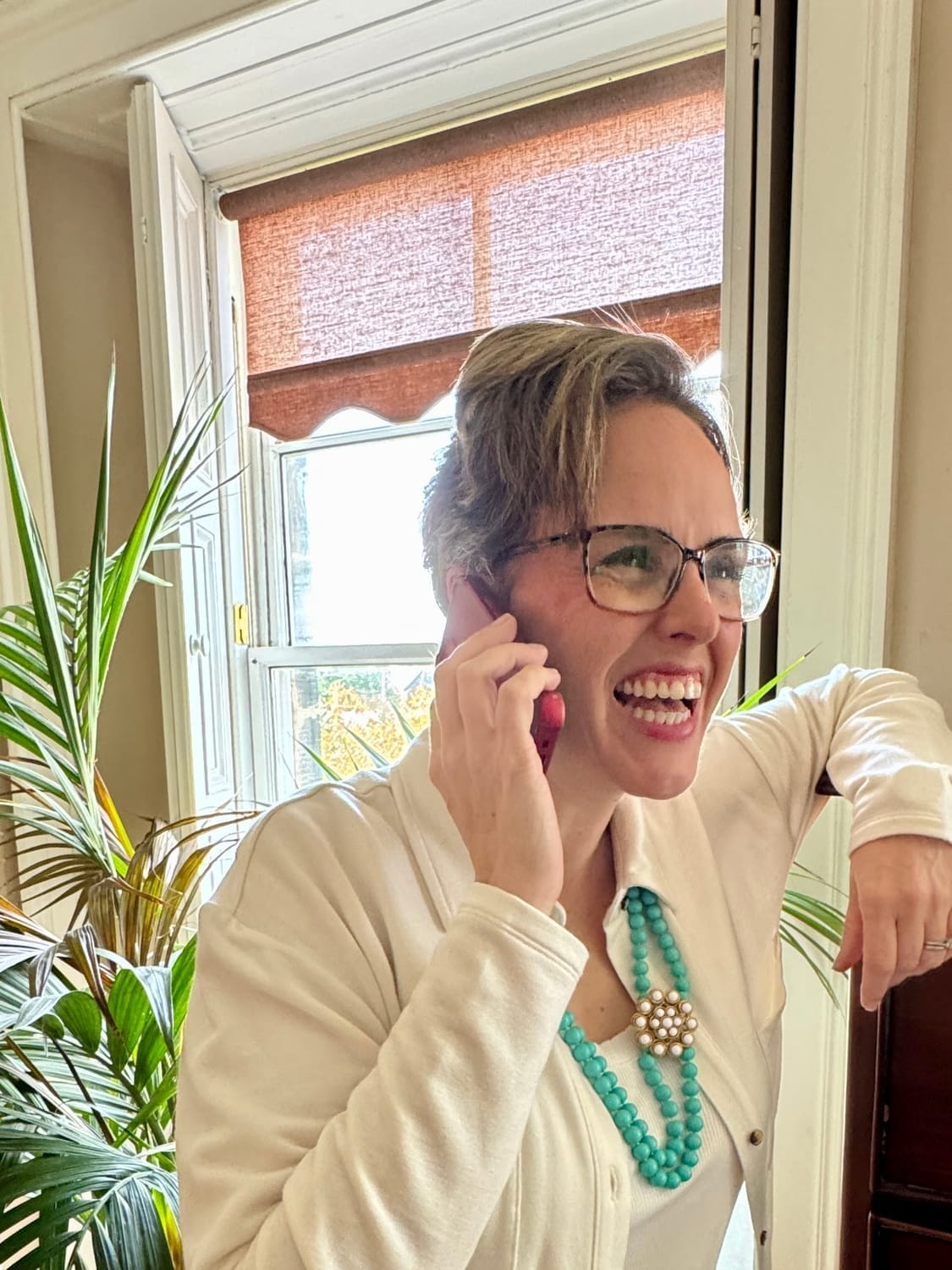
I'm Dr Suzanne Doyle‑Morris and I support professional women working in STEM.
Whether you’re seeking your next promotion, aiming for leadership, or simply looking to make your mark, this blog is created for you.
It's written for the ambitious woman in STEM ready to advance and succeed on her own terms.
Blog Categories
FREE GUIDE
The Women in Tech Promotion Playbook
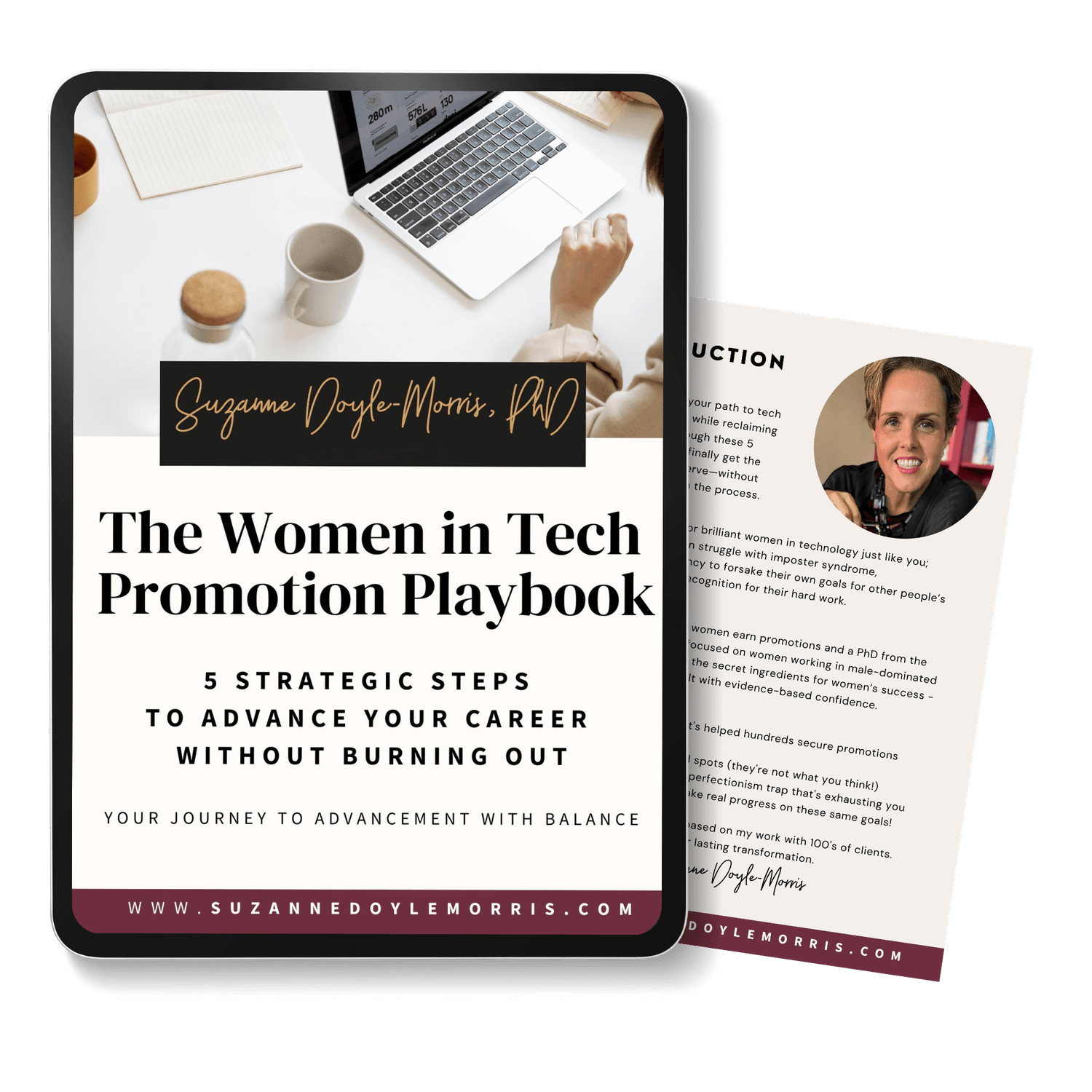
Your roadmap to advancement with balance.
The Women in Tech Promotion Playbook is a practical, evidence-based guide.
It's designed solely for ambitious women in STEM who want to advance their careers without burning out.
Drawing on over 25 years of coaching, research and consultancy, I outline five strategic steps that help women move from being overworked and under-recognised to confident, visible leaders.
Latest on the blog
The Women in Tech Promotion Playbook
Your roadmap to advancement with balance
The Women in Tech Promotion Playbook is a practical, evidence-based guide designed for ambitious women in STEM who want to advance their careers without burning out. Drawing on over 25 years of coaching and research, I outline five strategic steps that help women move from being overworked and under recognised to confident, visible leaders.