She Was Warned About Decisions Behind Her Back. Ever Heard that Warning?
On warnings from peers that leave you nothing to act on.
"Things are being decided right now that will affect your future. People just aren't telling you."
That was the warning a senior woman I work with received, days into her new role.
It came from someone she knew well.
But it contained no detail at all: no names, no decisions, nothing she could act on.
If you've ever been on the receiving end of a comment like that, you'll know the pull.
You want to know who.
You want to know what.
You lie awake rehearsing the conversation you'll have in the morning, the sly enquiries you'll have to make.
But my client did none of it.
Why she let it go
"It's almost designed to unsettle me," she told me.
The colleague had his own priorities, and his own dynamics with other people in the senior team.
So she heard the warning, then let it go. Chasing who was saying what, in her words, would have been "a total waste of my energy."
That isn't avoidance.
It's a decision about where her energy earns a return.
She had a department to listen to, a strategy to build and a promotion of her own to work towards.
A rumour with no detail, from a colleague who had his own agenda?
It wasn't making her list.
What a warning like that is for
A warning with no detail can't help you.
You can't check it, act on it or fix anything with it.
So it's worth asking what it's for.
Sometimes the person means well and doesn't know any more than they've said.
But from a peer with his own agenda, a vague warning often does something else.
It plants a doubt.
It has you looking over your shoulder, just when your attention should be on the people you lead.
And it reminds you, without explicitly saying so, who's been in the room longer, and with more 'important' people than you have.
Maddening.
That's why she was right to name it for what it was: designed to unsettle.
Out of her hands
She already knew how to let go of things she couldn't control, from another part of her life.
Her grown-up son had just spent a couple of weeks hiking in the wilds, well out of phone signal.
Plenty of people expected her to be "worried sick". She wasn't.
She trusted he was prepared, as she'd raised him to be, and the rest was out of her hands.
So she slept well every night he was away.
Even the idea that she should be worrying belonged to other people.
At work, that clarity is harder to hold.
The stakes are high and the voices are louder, and the more senior you become, the more voices there are.
She couldn't control what was being decided in rooms she wasn't in.
She could control how much of her attention it got.
Where her energy went instead
None of this means ignoring what people tell you.
She was in the middle of meeting dozens of colleagues to hear what they needed, and she took every one of those conversations seriously.
That feedback was about the department and its future, and it was what she'd asked for.
The skill is telling the two apart.
Is this something you can act on, from someone who'll help shape your future?
Or is it a shadow, cast in your direction by someone with reasons of their own?
After all, as I explore in why "be more confident" is the wrong advice for senior women, the more senior you become, the more you're challenged, and the less of that challenge has anything to do with you.
That's why it pays to know whose views decide your next move, and to spend your energy there.
The question worth asking
Next time a peer hands you a warning you can do nothing with, ask what it's for.
If it gives you nothing to act on, you're allowed to hear it, and let it go.
She didn't ask who.
She got on with the job, and the energy she saved went into the work that mattered.
If you're spending energy on voices that don't decide your future, I'd love to talk.
Email me at suzanne@doylemorris.com to arrange a chemistry call.
If this resonated, I write about moments like this every other week, the ones senior women in STEM recognise immediately and hadn't quite named yet.
Subscribe at suzannedoylemorris.com
Welcome to my Blog
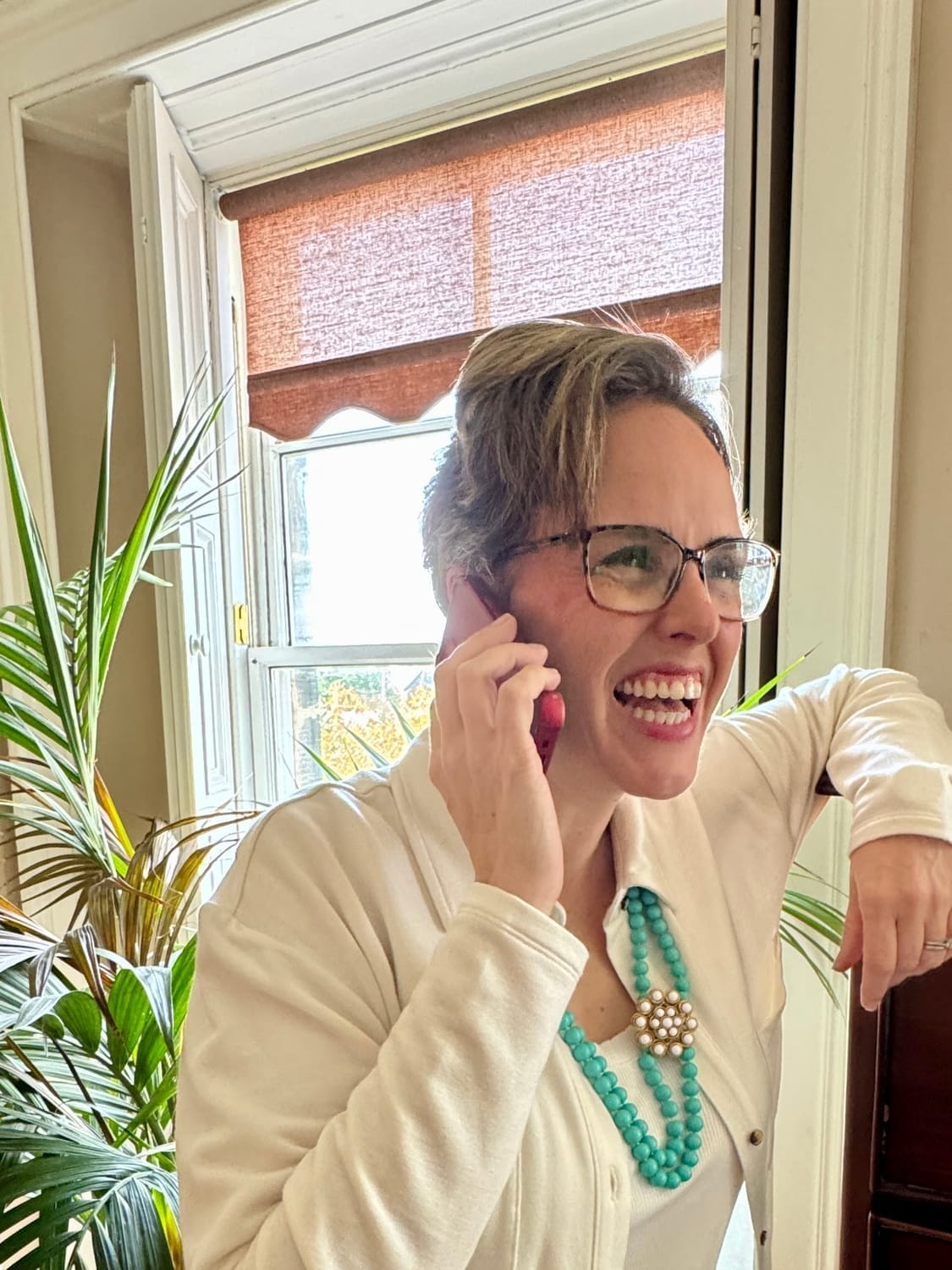
I'm Dr Suzanne Doyle‑Morris and I support professional women working in STEM.
Whether you’re seeking your next promotion, aiming for leadership, or simply looking to make your mark, this blog is created for you.
It's written for the ambitious woman in STEM ready to advance and succeed on her own terms.
Blog Categories
FREE GUIDE
The Women in Tech Promotion Playbook
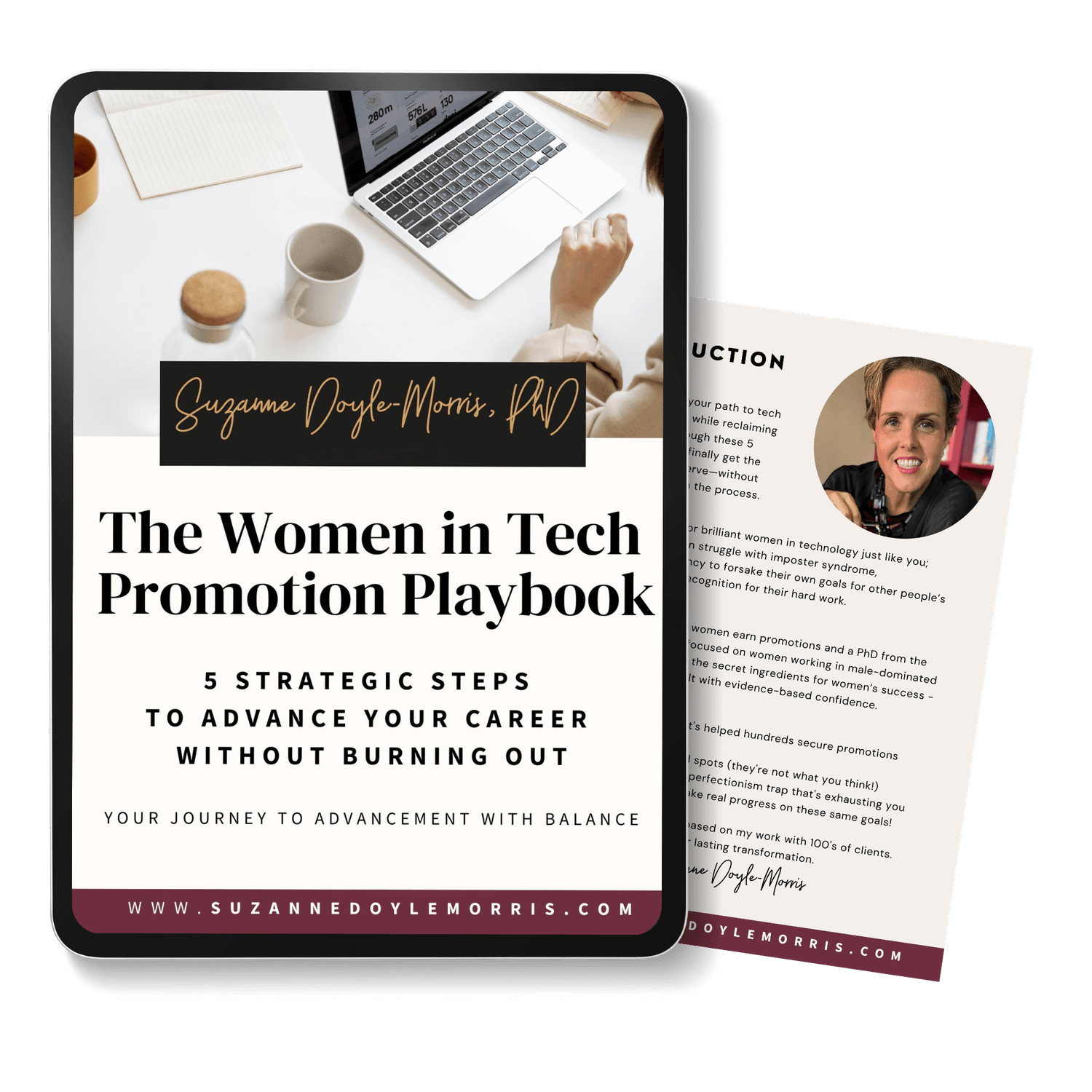
Your roadmap to advancement with balance.
The Women in Tech Promotion Playbook is a practical, evidence-based guide.
It's designed solely for ambitious women in STEM who want to advance their careers without burning out.
Drawing on over 25 years of coaching, research and consultancy, I outline five strategic steps that help women move from being overworked and under-recognised to confident, visible leaders.
Latest on the blog
The Women in Tech Promotion Playbook
Your roadmap to advancement with balance
The Women in Tech Promotion Playbook is a practical, evidence-based guide designed for ambitious women in STEM who want to advance their careers without burning out. Drawing on over 25 years of coaching and research, I outline five strategic steps that help women move from being overworked and under recognised to confident, visible leaders.