How to Ask for Help at Work Without Looking Weak
She Allowed Herself to Cry Once. Then Her Coping Mechanism Stopped Working.
On asking for help at work, and what happened when she finally did.
I noticed it within the first few minutes of our session.
She looked lighter.
Not rested. She'd had a brutal week, and told me so.
But something in her face had shifted since the month before, and it took me a few minutes to identify it.
But there it was: she'd stopped holding everything together on her own.
The self-imposed rule that got her through
Some time ago, she was diagnosed with a serious illness.
She's senior. She's the one people rely on.
And she dealt with it the way lifelong 'high achievers' handle things.
She simply made a rule to get herself through.
At her diagnosis, she told her family they were allowed to cry once.
Just once.
After that, everyone had to stay positive.
For her, it wasn't coldness. It was sheer survival.
She couldn't carry other people's fear on top of her own, so she built a structure that tidily and efficiently kept it out.
And it worked. For a while.
The same structure followed her into work.
She didn't talk about the treatment.
She didn't mention the days she couldn't think straight.
She kept delivering, largely without support from a boss she described, memorably, as difficult at best.
Someone who said all the 'right things', but didn't cut her an inch of slack after such a serious diagnosis.
Maybe you've worked for someone like that too?
When protection becomes the problem
Here's what I've learned from working with senior women for over twenty years.
The structures we build in a crisis are usually exactly right for that crisis.
The trouble is, we rarely take those structures, that mental scaffolding, down afterwards.
The scaffolding went in to protect us.
So we leave it standing long after the danger has passed, and it quietly starts cutting us off from the very things we now need.
Help. Honesty. Other people.
In our previous session, she'd started to loosen the scaffolding.
She found it really hard.
Saying out loud the things she'd kept locked away for months was, in her words, hugely challenging, to say the least.
After all, she'd made her reputation on being the person other people could go to.
But in the weeks between sessions, she'd done something she'd never done before in her career.
What happened when she asked for help at work
She told her team that on the days after her treatments, she wouldn't be able to function.
Someone would need to step in.
They didn't just step in.
They got creative.
They created solutions for problems she'd always found annoying, but had simply worked through.
This led to a better result for everyone, even beyond her team, which became a real unexpected, and certainly unasked for, win.
Then she went further with her vulnerability.
She admitted to a senior colleague that she was worried about losing her job.
Her difficult boss's star was no longer rising, and she feared she'd go down with him.
The colleague was astonished she'd even been thinking it, and reminded her how valued she was within the wider organisation.
Two days later, that colleague came back, having spoken to the right people.
If the worst happened, there was a role waiting for her. Agreed. Done.
None of that could have happened while the worry stayed hidden.
She'd spent months feeling insecure at work.
The security arrived the moment she stopped pretending she didn't need security, or a 'coping mechanism' that kept her stiff upper lip intact.
The woman who used to be "a complete package"
She said something in that session I've thought about ever since.
She'd always seen herself as a complete package for her company.
But to her, asking for help meant admitting weakness.
And weakness was the one thing she couldn't afford.
Now she put it differently.
Being able to say what she needed had turned out to be one of her greatest strengths.
It was still frightening, she admitted.
You never know how people will react.
But most people, it turned out, reacted with kindness and empathy.
Far more than she'd anticipated, even.
Many seemed glad to be asked.
As I explore in why "be more confident" is the wrong advice for senior women, the problem is rarely what it looks like from the outside.
She'd never lacked confidence.
She'd been carrying everything alone, and calling it strength.
The question worth asking
You may have built something to get you through a hard stretch: a rule, a facade, a way of keeping everything contained.
It may have served you brilliantly.
But it's worth asking whether it's still serving you now.
The same structure that kept you safe may be what keeps the right people from helping you.
Much like letting your work speak for itself, staying silent about what you need assumes others will notice without being told.
They rarely do.
If there's something you've been holding together on your own for too long, I'd love to have a conversation.
Email me at suzanne@doylemorris.com to arrange a chemistry call.
If this resonated, I write about moments like this every week, the ones senior women in STEM recognise immediately and hadn't quite named yet.
Subscribe at suzannedoylemorris.com
Welcome to my Blog
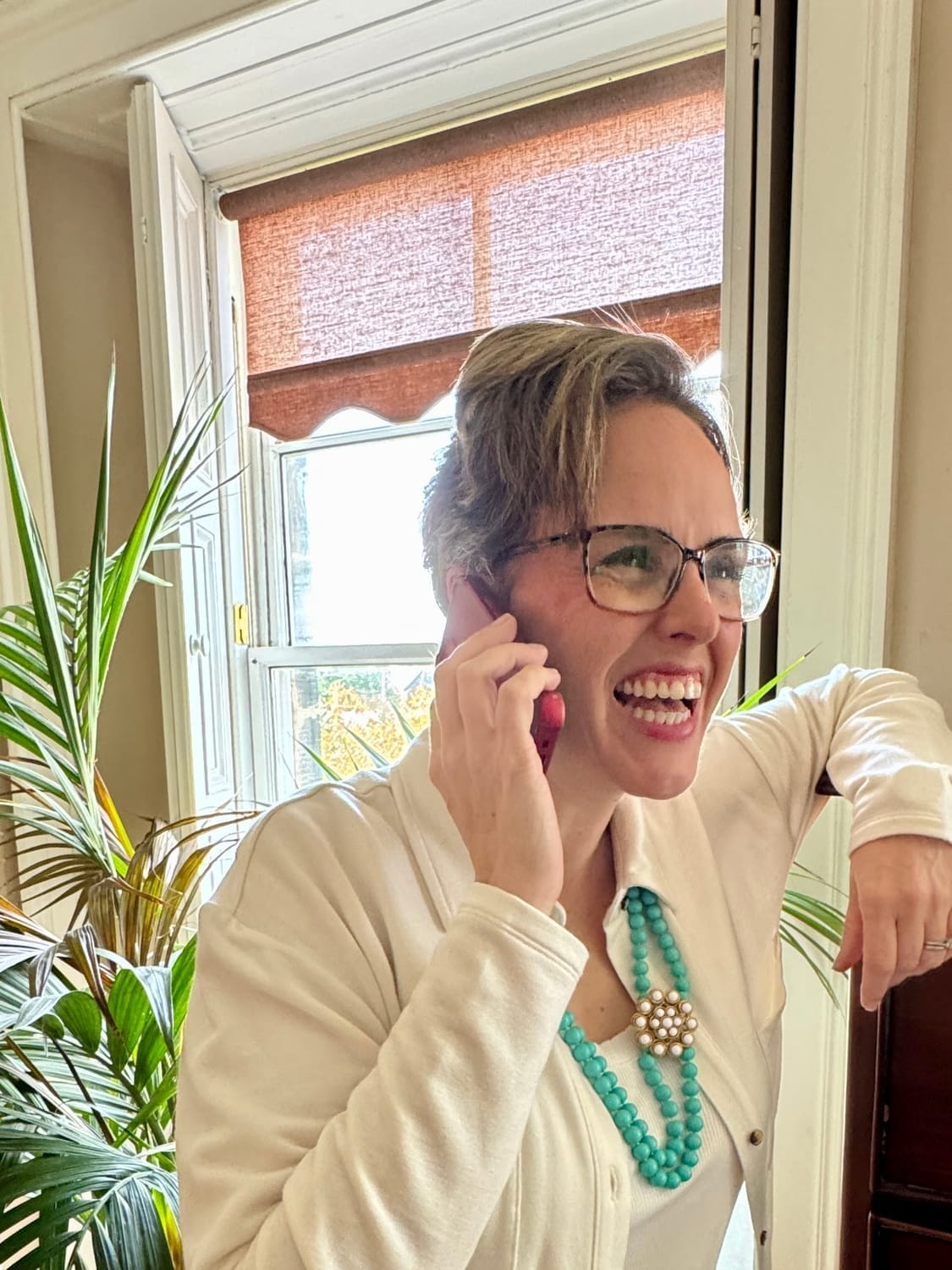
I'm Dr Suzanne Doyle‑Morris and I support professional women working in STEM.
Whether you’re seeking your next promotion, aiming for leadership, or simply looking to make your mark, this blog is created for you.
It's written for the ambitious woman in STEM ready to advance and succeed on her own terms.
Blog Categories
FREE GUIDE
The Women in Tech Promotion Playbook
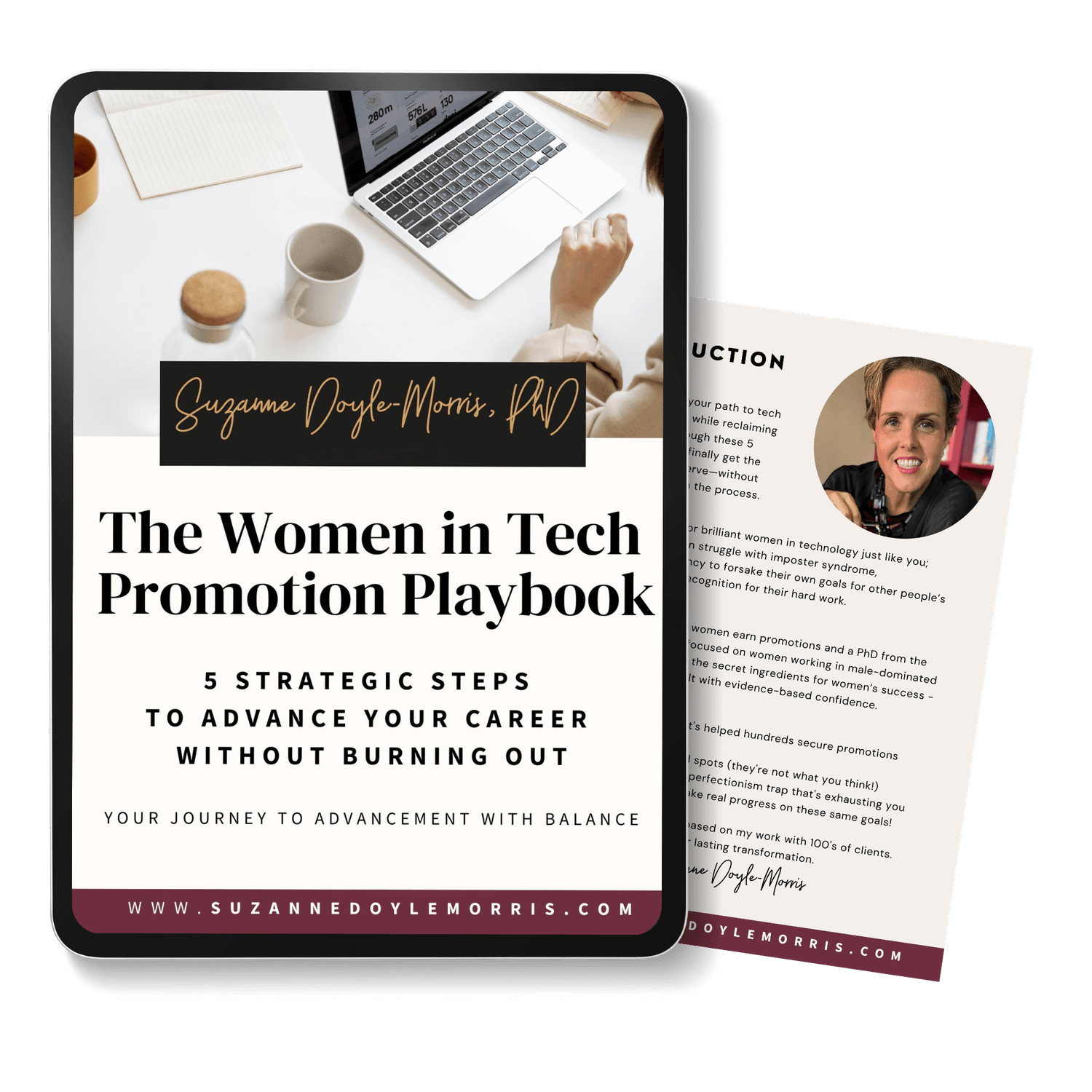
Your roadmap to advancement with balance.
The Women in Tech Promotion Playbook is a practical, evidence-based guide.
It's designed solely for ambitious women in STEM who want to advance their careers without burning out.
Drawing on over 25 years of coaching, research and consultancy, I outline five strategic steps that help women move from being overworked and under-recognised to confident, visible leaders.
Latest on the blog
The Women in Tech Promotion Playbook
Your roadmap to advancement with balance
The Women in Tech Promotion Playbook is a practical, evidence-based guide designed for ambitious women in STEM who want to advance their careers without burning out. Drawing on over 25 years of coaching and research, I outline five strategic steps that help women move from being overworked and under recognised to confident, visible leaders.