I Turned Down the Speech I'd Have Killed For Five Years Ago. And Didn't Look Back.
The fee would have covered several mortgage payments. I said no anyway.
Five years ago, I'd have rearranged my entire month for this invitation.
A London conference, a big stage, a comfortable mid to high four-figure fee.
The kind of booking that used to feel like proof I'd arrived, and that I'd earned from all the presentations I'd given before this new request.
This time, I looked at their "must-have" date, though given at relatively short notice to me, and thought deeper about the logistics.
The flight or the long rail journey, the rescheduling of a pre-arranged international teleconference with my parents' carers, let alone the whole weekend of activities I'd have to forgo, and it all felt a bit different.
A little less like the prize I'd won for years, and a bit more like an obligation I no longer wanted.
So I said no.
What saying no actually meant
It wasn't really about the six-hour train journey, each way.
It was that I'd spent twenty years building a career on being the person who showed up, wherever, whenever, however inconvenient, because that's what building a reputation from a small Scottish village required.
If people were going to remember me, I had to keep turning up in the rooms where the people who were hiring me actually were. Makes sense, right?
For a long time, that trade felt fair.
I got a lot of business out of it. Recognition. A career built entirely on merit and word of mouth; I actually had plenty of competition in London.
The talks I gave for nearly 20 years were memorable for their mix of dry wit and gallows humour, and the impact of my executive coaching led to more work via internal recommendations.
But there's a difference between building something and maintaining it, harder still when those clients are in London and Edinburgh, Boston and Manhattan.
And somewhere in the last five years, without noticing exactly when, I stopped needing to build.
What I Chose Instead
What I actually wanted, once I let myself ask, was smaller, closer and with people I'd likely see again; all a real departure for me.
Not smaller in impact. Just in terms of geography.
I wanted relationships I could deepen over a decade rather than a single evening's speech and a little Q&A.
I wanted work I could do without a hotel key card.
I wanted, if I'm honest, to stop performing for the event organisers who knew I was the right person for their audience, and focus more on what the women in the room actually wanted.
Closer to home, the women I kept meeting locally weren't looking for a keynote.
People were "returning to their offices," yet feeling increasingly distant from those around them.
They wanted engagement, not a shiny presentation, and were looking for somewhere to think out loud regularly and make progress with people who'd still be there next month.
So instead of the conference stage, I built a room.
It started, literally, at the Cocoa Tree Cafe, once a month, for six months, three tables pushed together.
'Permission Granted' starts 22 September
I still get the invitations. I still say yes to some of them. But I no longer confuse the size of the stage with the size of the potential impact.
Six monthly evenings, back at the Cocoa Tree in Pittenweem. Ten women, maximum.
Early Bird pricing (15% off) is available until 8 September.
After that, enrolment stays open through to the first evening on 22 September, at full price.
If any of this sounds like the trade-off you're currently weighing, come and see what it is →
Not ready to commit yet, but want to keep hearing from me?
Subscribe on the front page of this website instead.
Subscribe at suzannedoylemorris.com
Welcome to my Blog
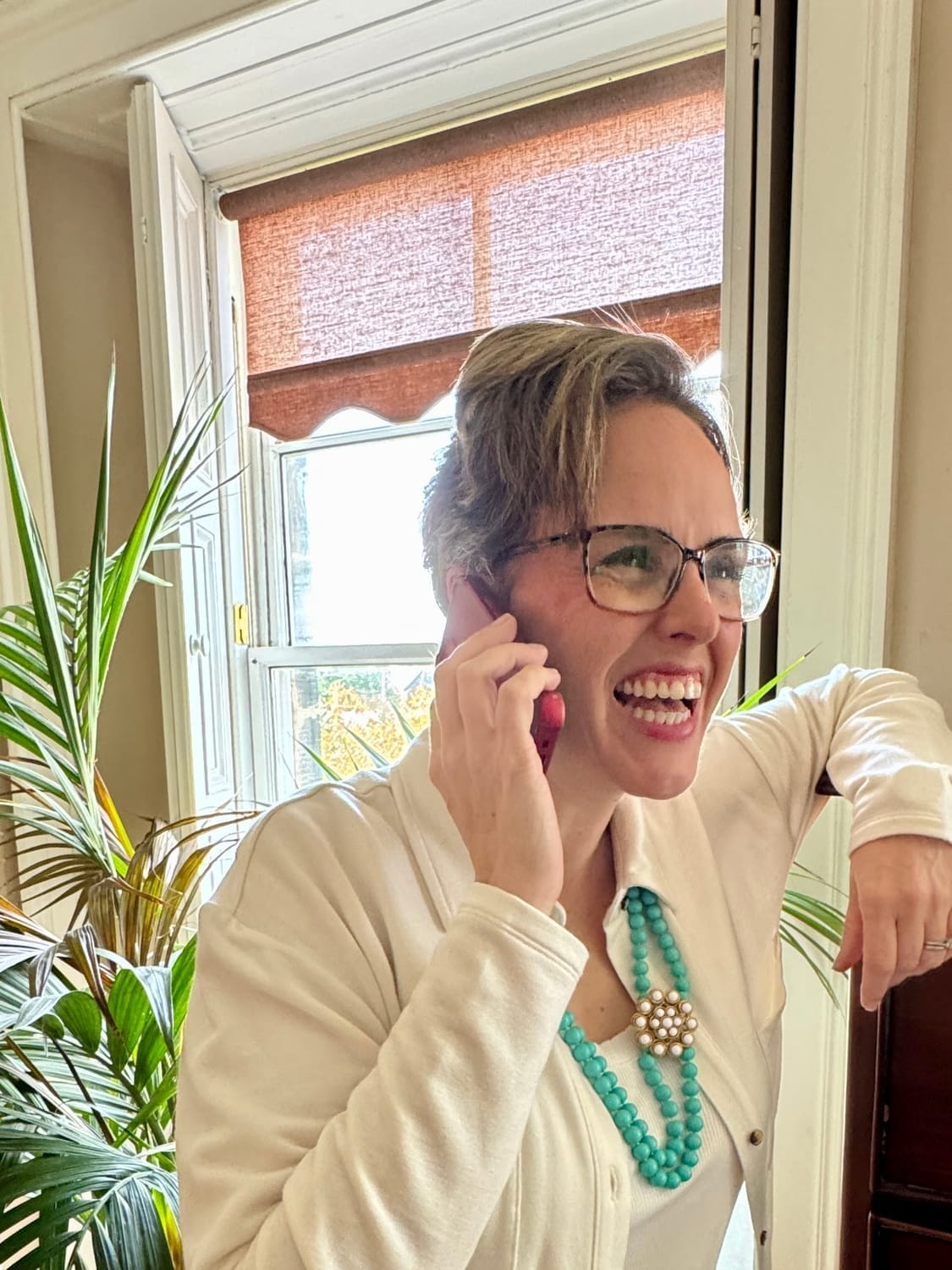
I'm Dr Suzanne Doyle‑Morris and I support professional women working in STEM.
Whether you’re seeking your next promotion, aiming for leadership, or simply looking to make your mark, this blog is created for you.
It's written for the ambitious woman in STEM ready to advance and succeed on her own terms.
Blog Categories
FREE GUIDE
The Women in Tech Promotion Playbook
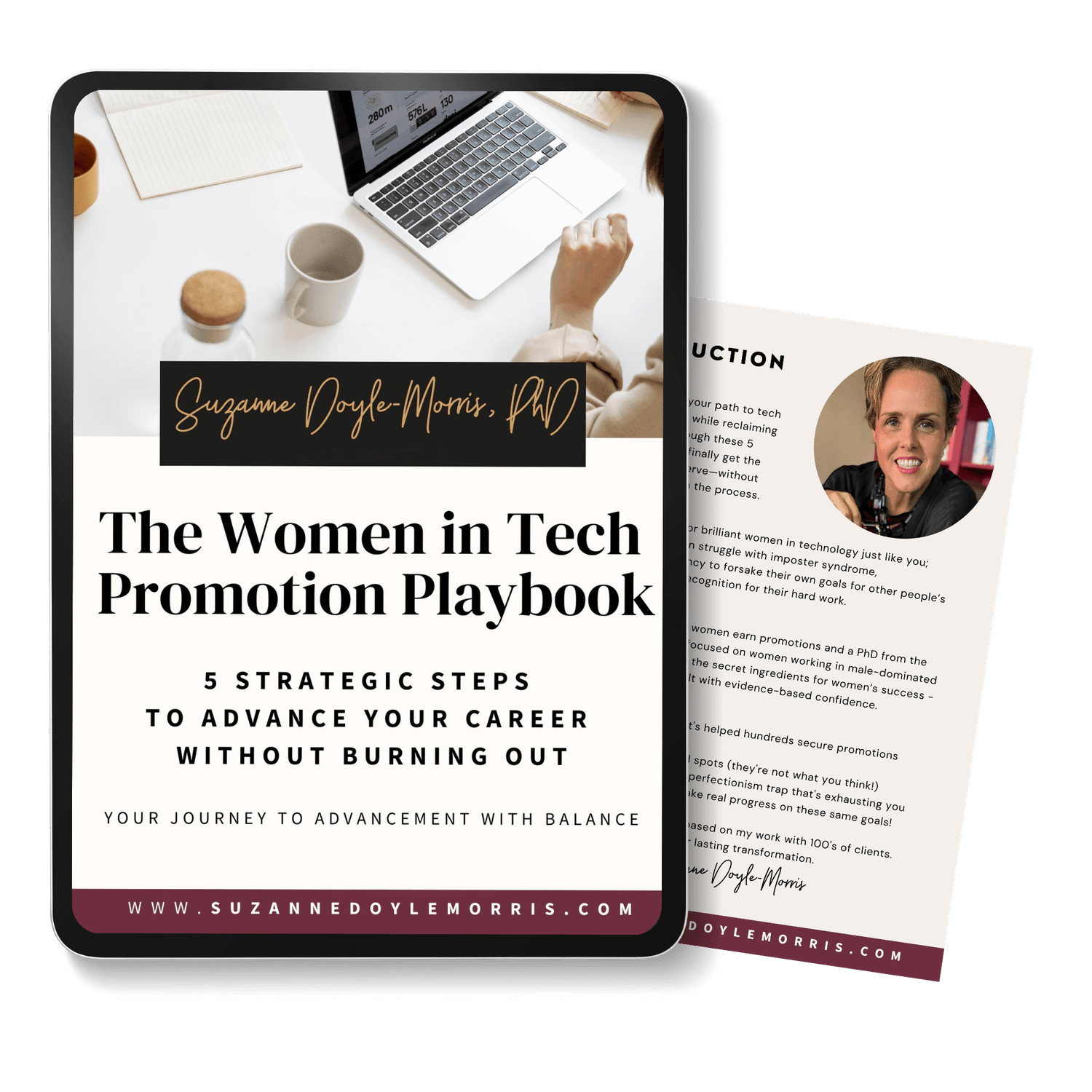
Your roadmap to advancement with balance.
The Women in Tech Promotion Playbook is a practical, evidence-based guide.
It's designed solely for ambitious women in STEM who want to advance their careers without burning out.
Drawing on over 25 years of coaching, research and consultancy, I outline five strategic steps that help women move from being overworked and under-recognised to confident, visible leaders.
Latest on the blog
The Women in Tech Promotion Playbook
Your roadmap to advancement with balance
The Women in Tech Promotion Playbook is a practical, evidence-based guide designed for ambitious women in STEM who want to advance their careers without burning out. Drawing on over 25 years of coaching and research, I outline five strategic steps that help women move from being overworked and under recognised to confident, visible leaders.