The Old Report You'd Swear Someone Else Wrote
A Podcast Invitation Sent Me Back to a Book I Hadn't Opened in a Decade
A wealth coach invited me onto her podcast, Serious Coin by Kelly Willis Green.
Her audience is high-net-worth individuals; people who've inherited, earned, or married into significant money.
I mostly work with the ones who earned it, so I didn't think I was an 'obvious fit', but she'd noticed how relevant my topics were to her listeners.
The part that made me smile: she'd only found me because one of her own clients had recommended Female Breadwinners, the book I wrote fifteen years ago.
It’s my least commercially successful book, as it happens, but still one of the most relevant to the women I coach today:)
So I did the diligent thing and sat down to re-read it before recording.
I hadn't opened it in over a decade.
I Expected to Slightly Cringe. Instead I Caught Myself Grinning.
I think I'd actually braced myself to wince; going back to old work expecting it to be thinner and more naive than I'd remembered.
What I'd forgotten was how naughty it was in places.
How much these women had let me in.
They'd told me the real secrets of their marriages; what made these relationships work, what was hard, the private jokes they had with their husbands about how much more she earned.
And how proud she was and how she wouldn't trade places with him in the least.
One woman's husband ‘joked’ with her that she didn't have to be particularly brilliant to make money in her field, airline security, in the years after 9/11.
She told me she'd shot back: "Yes, I work fewer hours than you. But I get paid more. Now who's the smart one?"
Reading it back, I could see what I'd actually managed to do: I'd succeeded in getting twenty-six women to tell me the truth; the whole story.
Not the polished version; the real one.
The love, support and the resentment tangled together in the same marriage, the way they are for most couples.
These weren't case studies.
They were real people, speaking honestly.
And it hadn't felt like that at the time. Fifteen years ago I was in the thick of it, unsure, second-guessing myself.
The thing I was good at, getting them to open up about both their fears and joys, wasn't visible to me while I was doing it.
But it made for great interviews and it makes for even better coaching.
My Clients Have This Exact Moment
Here's why I'm telling you this, because it isn't really about my book.
I've watched client after client have the same experience.
One was nearing retirement and clearing out her office when she found a paper she'd written in her twenties.
At first she assumed someone else had written this piece of research.
After all, it was too pithy, too clear-headed to be hers, right?!
That was not, she said, how she remembered feeling in her twenties.
She remembered the uncertainty she felt daily, not how determined she was and her deep competence in her specialist subject.
That gap between how capable we felt at the time and how capable we actually were is one of the most common things I see in senior women.
You don't notice the thing you're good at while you're producing it, because from the inside it feels like effort and doubt and making it up as you go.
It only becomes visible when you meet the evidence later: the old report, the early paper, the book you'd forgotten.
The Twist: I Didn't Even Need to Prepare
There's a coda I find funny.
When the host and I did our pre-call, the conversation where Kelly checks you're a good fit for the show, the stories just came out of me.
Naturally, in order, without effort.
All that careful re-reading, and it turned out the material had been in me the whole time.
I hadn't needed to revise for the exam.
I knew it cold. After all, I'd been the one who's written it!
Which is rather the point.
The thing you're good at is in you. You did it.
The feeling that you might not be enough, that you'll be exposed, that you need to cram before you're allowed to speak with authority?
That feeling is rarely an accurate report of what you actually know.
Reminding myself of all this relieved me to no end, in the days before the podcast.
You will always have a high bar to reach.
Don't go setting it any higher for yourself than it already is.
If this is the kind of thing you turn over, my newsletter is where I write about it first, usually before I've worked out the tidy version.
You can subscribe on the front page of this website.
And if you're somewhere where the gap between how capable you feel and how capable you are has started to cost you, a role you're not putting yourself forward for, a room you go quiet in.
That's the work I do one to one.
There's even a free chemistry call you can ask me about.
Welcome to my Blog
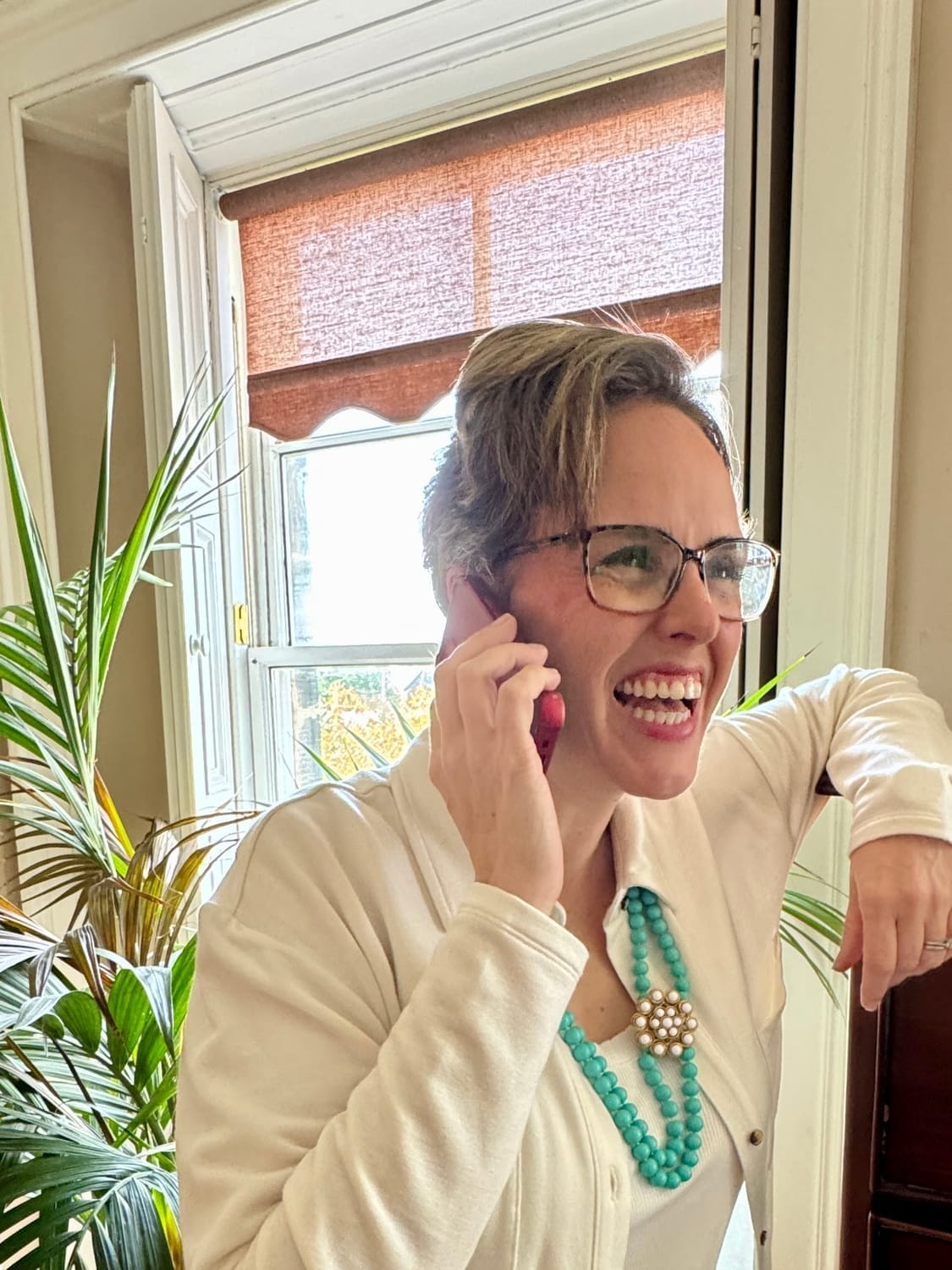
I'm Dr Suzanne Doyle‑Morris and I support professional women working in STEM.
Whether you’re seeking your next promotion, aiming for leadership, or simply looking to make your mark, this blog is created for you.
It's written for the ambitious woman in STEM ready to advance and succeed on her own terms.
Blog Categories
FREE GUIDE
The Women in Tech Promotion Playbook
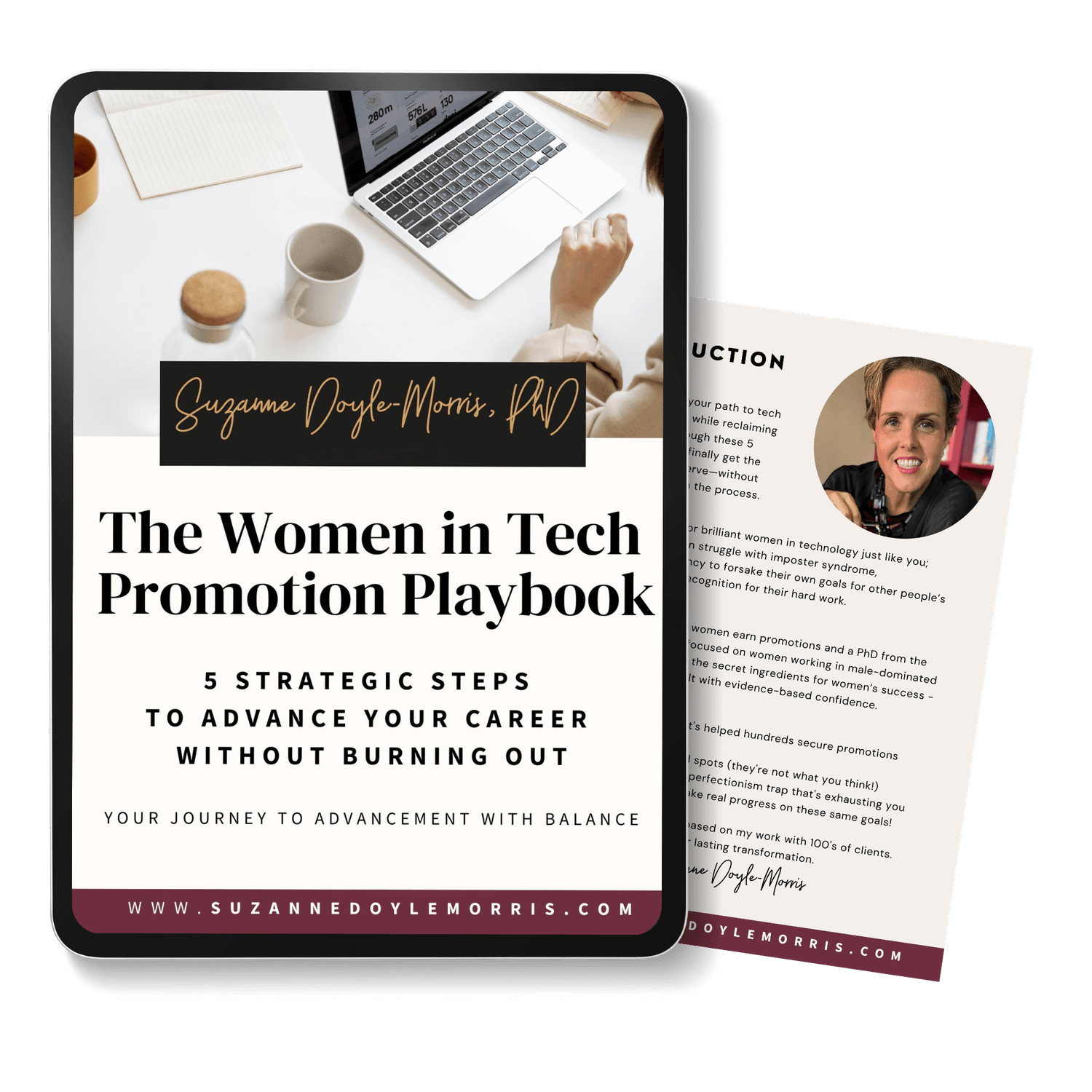
Your roadmap to advancement with balance.
The Women in Tech Promotion Playbook is a practical, evidence-based guide.
It's designed solely for ambitious women in STEM who want to advance their careers without burning out.
Drawing on over 25 years of coaching, research and consultancy, I outline five strategic steps that help women move from being overworked and under-recognised to confident, visible leaders.
Latest on the blog
The Women in Tech Promotion Playbook
Your roadmap to advancement with balance
The Women in Tech Promotion Playbook is a practical, evidence-based guide designed for ambitious women in STEM who want to advance their careers without burning out. Drawing on over 25 years of coaching and research, I outline five strategic steps that help women move from being overworked and under recognised to confident, visible leaders.