She Proved She Could Leave. And That Changed Everything.
She used the evidence most senior women never collect...or forget.
She had built something significant.
A team, a function, a reputation.
Years of careful work, now humming along without her having to direct every part of it.
And then a sabbatical opportunity came up that she didn't want to turn down.
She wasn't entirely comfortable about being away for several months.
The thought of being unavailable at times, geographically unreachable in the daily sense, sat uneasily with someone who had grown the team from 2 to 15 and had always been the one holding things together.
We'd worked together before, including when she was first growing the team.
She knew from experience that things hadn't fallen apart then either.
But we put a plan in place. And then she left.
Things went well while she was away.
Better than she had feared.
The Evidence She Didn't Know She Was Collecting
A year after she returned, she looked back at those months of absence.
Her team had continued. The work had moved forward.
The thing she had spent years building had, it turned out, been built well enough to function without her daily presence.
"It was like my absence had never happened."
She had collected that evidence before, without fully realising it.
When she'd taken maternity leave years earlier, she'd faced the same discomfort, the same sense that her presence was what held everything together, that being away for months was a risk the team couldn't absorb.
But they had absorbed it. The team had continued.
Things hadn't fallen apart.
She'd filed that away somewhere, not quite as evidence, more as relief.
But when the sabbatical came up years later, it was still there.
A quiet memory of having stepped back before and finding the ground still solid when she returned.
That's what she was drawing on when she took the sabbatical.
Not blind faith in her team.
Evidence she'd been collecting for years without knowing she was building a case.
This is the thing about evidence.
You don't always know you're collecting it at the time.
She didn't take that sabbatical in order to prove that her team could manage without her.
But what she came back with was something most leaders spend years trying to build deliberately: proof that her absence wasn't the same as her team's failure.
Indeed, it was a credit to what she'd built!
The Feeling Underneath It
Maybe you can relate?
Perhaps not to the specific circumstance, but to the feeling underneath it.
The sense that your presence is what's holding everything together.
That stepping back, even briefly, is a risk you can't quite afford to take.
That the moment you're not watching, something will slip.
It's one of the patterns I explore in why letting your work speak for itself is costing you the promotion.
It's the assumption that visibility and presence are the same thing.
They're not.
And the women who discover that earliest tend to lead differently as a result.
When opportunities arose later to spend extended time working from elsewhere, she didn't hesitate in the way she once might have.
After all, she had the evidence it could work.
The Part Most Senior Women Never Reach
Most of the senior women I work with through executive coaching for senior women in STEM have rarely tested what happens when they step back.
They haven't taken the sabbatical.
They haven't delegated the project they could have done better themselves.
They haven't left early, or always taken their full holiday allowance, or let the team handle a difficult situation without checking in every few hours.
Not because they can't.
Because they've never had the evidence that it's safe to.
And so they keep going. Keep being present.
Keep carrying the weight of a team that, in many cases, is more capable than they've ever allowed themselves to find out.
As I explore in when your boss won't listen, the most strategic move is rarely the most visible one.
Building a team that can function without you isn't absence of leadership.
It's actually the fullest expression of it.
The ones who can leave aren't the ones who care less.
They're the ones who built better before they went.
If you've never quite let yourself find out what your team can do without you, I'd love to have a conversation.
Email me at suzanne@doylemorris.com to arrange a chemistry call.
If this resonated, I write about moments like this every week, the ones senior women in STEM recognise immediately and hadn't quite named yet.
Real stories, fresh client insights, and the conversation most people around you aren't having or perhaps aren't sharing.
Subscribe at suzannedoylemorris.com
Welcome to my Blog
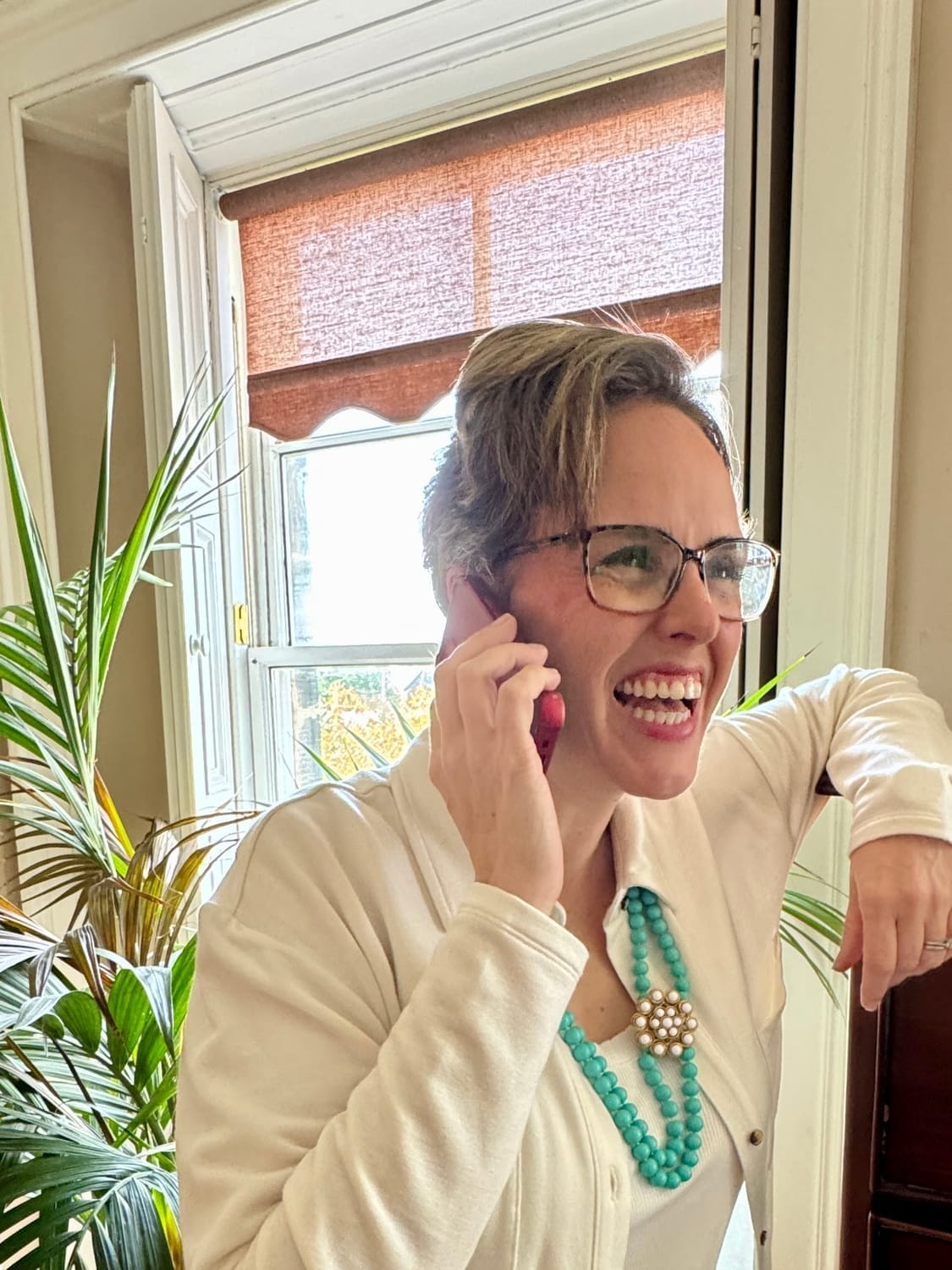
I'm Dr Suzanne Doyle‑Morris and I support professional women working in STEM.
Whether you’re seeking your next promotion, aiming for leadership, or simply looking to make your mark, this blog is created for you.
It's written for the ambitious woman in STEM ready to advance and succeed on her own terms.
Blog Categories
FREE GUIDE
The Women in Tech Promotion Playbook
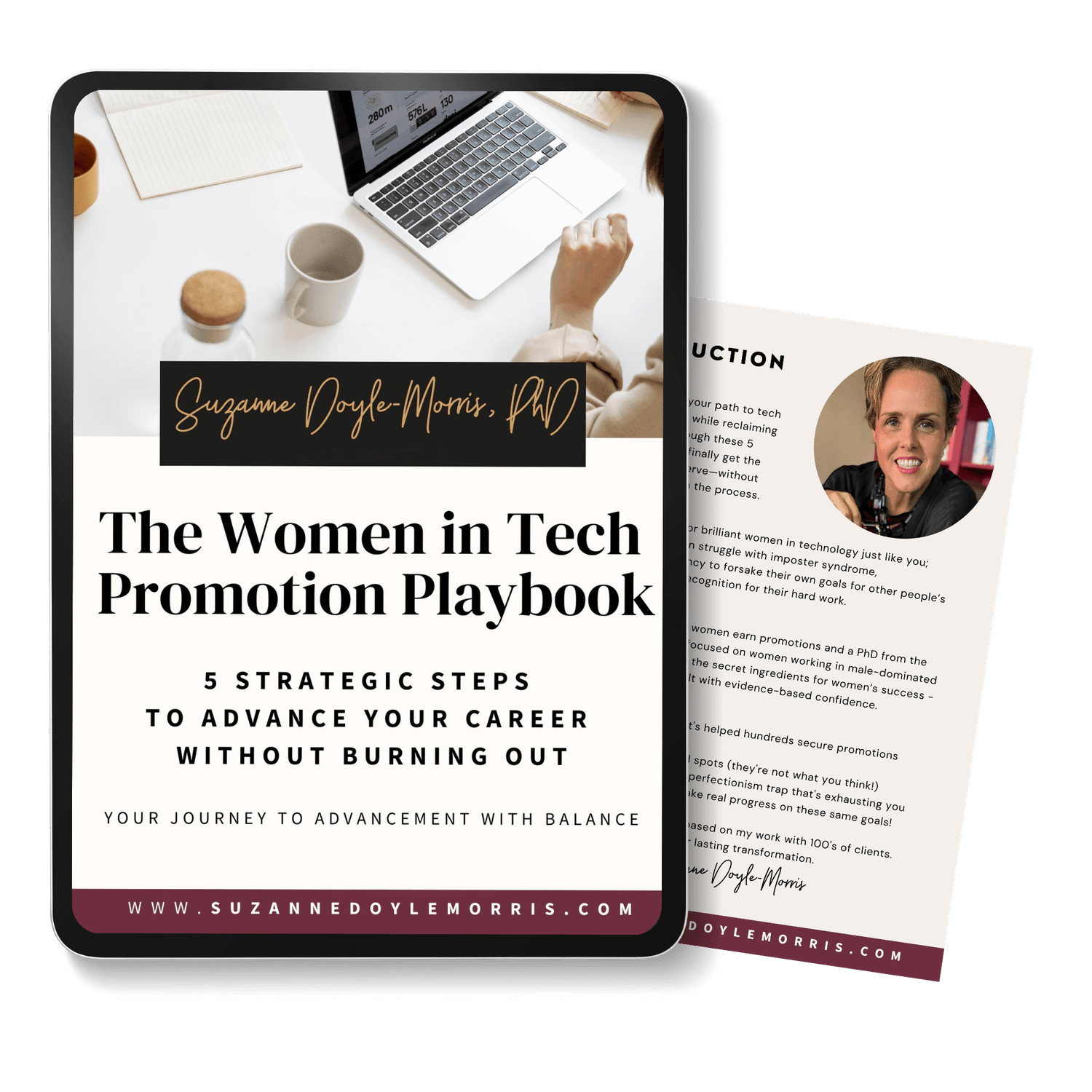
Your roadmap to advancement with balance.
The Women in Tech Promotion Playbook is a practical, evidence-based guide.
It's designed solely for ambitious women in STEM who want to advance their careers without burning out.
Drawing on over 25 years of coaching, research and consultancy, I outline five strategic steps that help women move from being overworked and under-recognised to confident, visible leaders.
Latest on the blog
The Women in Tech Promotion Playbook
Your roadmap to advancement with balance
The Women in Tech Promotion Playbook is a practical, evidence-based guide designed for ambitious women in STEM who want to advance their careers without burning out. Drawing on over 25 years of coaching and research, I outline five strategic steps that help women move from being overworked and under recognised to confident, visible leaders.