What Authentic Leadership Really Means for Women in STEM
Why Courage Is the Most Under-Discussed Leadership Skill
Being known for authentic leadership is what my coaching clients are aiming for.
It's a real version of who they are and how they want to be known.
When they talk about what they want from coaching, they use words like empathy, clarity, and decisiveness. These are all vital.
However, I believe courage is one of the most under-discussed authentic leadership skills.
It's particularly important to women leaders in STEM.
Yet courage is vital as these women are often in the minority in any meeting they attend.
Moreover, courage is what moves individuals and organisational cultures forward.
This is key if you want to be considered someone who embodies authentic leadership.
Sarah's Challenge: Speaking Up With Senior Stakeholders
A recent coaching client, Sarah, spoke of wanting to speak up more often.
Her focus was to get better mostly in meetings with senior stakeholders whom she wanted to impress.
This goal is relatively common, particularly amongst professional women in STEM.
These women rarely like 'brown-nosing' or repeating a point if they feel it's been made by someone else.
They're also often dubious about contributing if not 100% sure of the answer—even when they realise 100% certainty is a rarity in any workplace.
A Normal Response to Being the Minority
However, these feelings should be considered completely normal for anyone who is surrounded by very few people with whom they identify.
I listened to Sarah speak of her desire to model authentic leadership.
I noticed how often she used the word 'courage' in speaking of all that she 'lacked'.
Question #1: What Does Courage Mean to You?
If you identify with Sarah, think through how you'd answer this question:
'What does courage mean to you and what would more of it achieve?'
We drilled down into what it meant to build courage for Sarah.
She rolled her eyes and said: "The problem is that I'm not very courageous."
When working with my coaching clients, I love to help them rely on the evidence, not unsubstantiated fears.
I asked how true it was that she wasn't courageous, reminding her of how glowingly she'd spoken of a gap year in Asia she'd taken a few years before I met her.
Question #2: When Have You Already Been Courageous?
Additionally, I knew she'd recently set up a young professionals network within her organisation, as she felt she didn't know her peers well enough.
She smiled when we began to speak of what it took to build courage when canvassing people to see who would attend.
I then asked: "And didn't you leave home to attend university—a move you told me wasn't popular with your family?"
Opening the Floodgates
That question opened the floodgates of ideas and examples where she had shown courage—a key part of authentic leadership.
As we talked about these moments, she began to reflect on how she'd used them to build courage in ways she'd previously dismissed.
I asked how she would view them if someone else did those things—did they demonstrate courage or not?
She laughed and said: "Completely! I'd be so impressed!"
So then I asked:
"What else have you done that is courageous?"
She laughed, rattling off another three things within the next five minutes.
Question #3: What's Your New, More Accurate Story?
When I asked what it meant for her that she had quite a formidable list, Sarah smiled as she replied: "I guess courage has worked out for me!"
She then came up with several ways she could offer her observations and build courage in these meetings.
Now, she more readily identified herself as a courageous person based on her evidence.
Your Turn: What's Your Evidence?
Through our coaching sessions, my clients discover they already have extensive evidence of courage.
They've just been dismissing it because it doesn't match their narrow definition of what courage 'should' look like.
I help them stop 'shoulding' all over themselves!
What's your evidence, and how could you use that more often?
Ready to discover your own evidence of courage?
Email me at suzanne@doylemorris.com for a complimentary chemistry call.
We'll discuss your biggest workplace challenge and whether a 12-month coaching partnership makes sense for you.
Learn more: www.suzannedoylemorris.com
Welcome to my Blog

I'm Dr Suzanne Doyle‑Morris and I support professional women working in STEM.
Whether you’re seeking your next promotion, aiming for leadership, or simply looking to make your mark, this blog is created for you.
It's written for the ambitious woman in STEM ready to advance and succeed on her own terms.
Blog Categories
FREE GUIDE
The Women in Tech Promotion Playbook
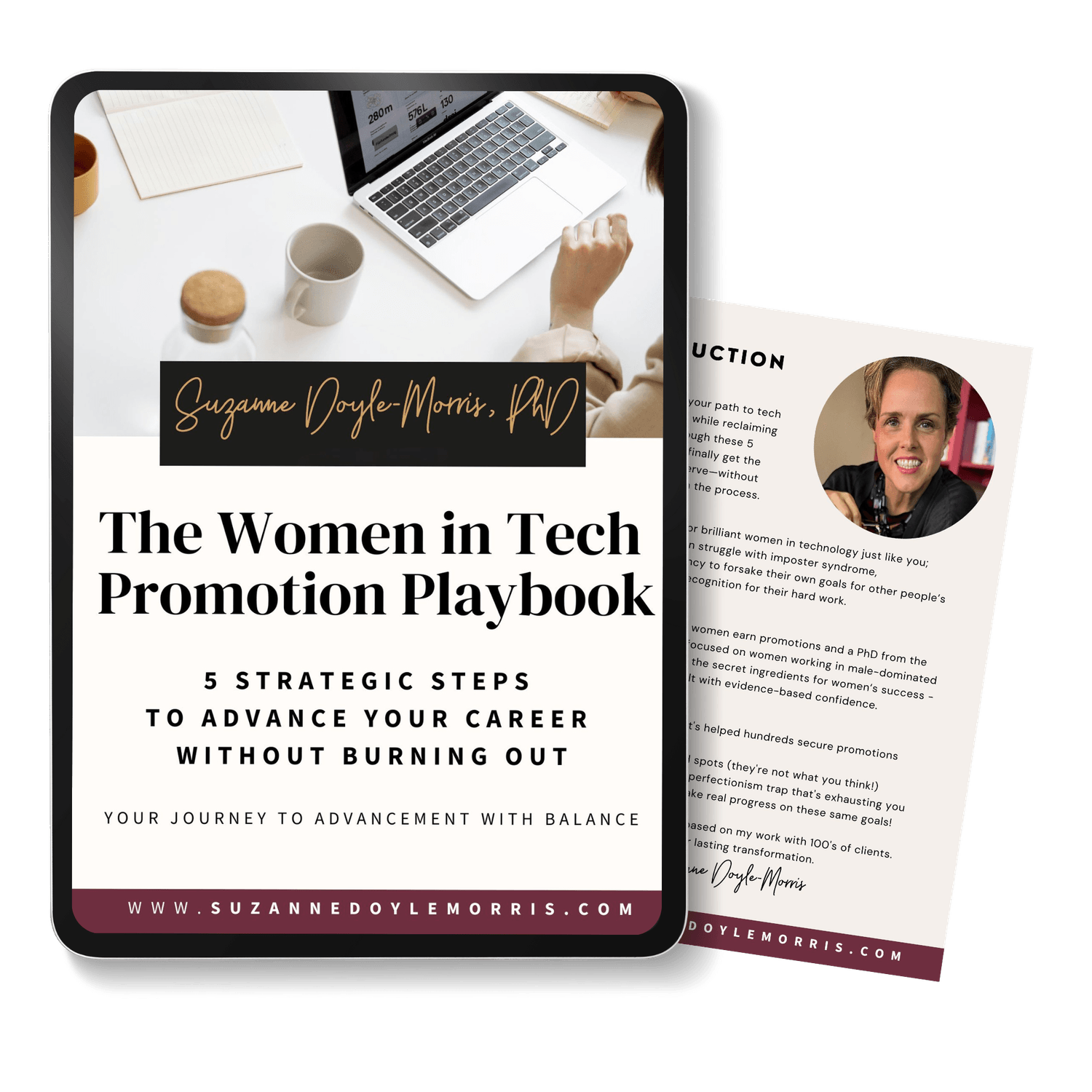
Your roadmap to advancement with balance.
The Women in Tech Promotion Playbook is a practical, evidence-based guide.
It's designed solely for ambitious women in STEM who want to advance their careers without burning out.
Drawing on over 25 years of coaching, research and consultancy, I outline five strategic steps that help women move from being overworked and under-recognised to confident, visible leaders.
Latest on the blog
The Women in Tech Promotion Playbook
Your roadmap to advancement with balance
The Women in Tech Promotion Playbook is a practical, evidence-based guide designed for ambitious women in STEM who want to advance their careers without burning out. Drawing on over 25 years of coaching and research, I outline five strategic steps that help women move from being overworked and under recognised to confident, visible leaders.


Free Workbook
The Senior Women in STEM Leadership Playbook
5 strategic steps to advance your STEM career — without burning out.
Ready to get recognised for the impact you already make? This free workbook gives ambitious women in technology a proven, evidence-based framework for earning promotions with confidence — while keeping balance and wellbeing intact.