A Podcast Invitation Sent Me Back to a Book I Hadn't Opened in Over a Decade
A wealth coach invited me onto her podcast, Serious Coin by Kelly Willis Green.
Her audience is high-net-worth individuals; people who've inherited, earned, or married into significant money.
I mostly work with the ones who earned it, so I wasn't the obvious fit, but she'd noticed how relevant my topics were to her listeners.
Listen in to our conversation here.
The part that made me smile: she'd only found me because one of her own clients had recommended Female Breadwinners, the book I wrote fifteen years ago.
It's my least commercially successful book, as it happens, but still one of the most relevant to the women I coach today.
So I did the diligent thing and sat down to re-read it before recording.
I hadn't opened cracked it open in over a decade.
I Expected to Slightly Cringe. Instead I Caught Myself Grinning in Recognition.
I think I'd actually braced myself to wince; going back to old work expecting it to be thinner and perhaps more naive than I'd remembered.
How all of us were 15 years ago!
What I'd forgotten was how naughty it was in places.
How much these women had let me in.
They'd told me the real secrets of their marriages; what made these relationships work, what was hard, the private jokes they had with their husbands about how much more she earned.
How proud that woman was and how she wouldn't trade places with the man in her life in the least.
One woman remembered that husband "joked" with her that she didn't have to be particularly brilliant to make money in her field, airline security, in the years after 9/11.
She shot back: "Yes, I work fewer hours than you. But I get paid more. Now who's the smart one?"
Reading it back, I could see what I'd actually managed to do: I'd succeeded in getting twenty-six women to tell me the true things.
Things from the heart.
Not the polished version of their lives; the real one.
About the way love, support and the resentment tangled together in the same marriage, the same way they are for most couples.
These weren't case studies of women who had all the answers or had it all figured out.
They were real people, speaking honestly.
And it hadn't felt like that at the time.
Fifteen years ago I was in the thick of it, unsure, second-guessing myself.
Even as I'm attempting to write my second book after 'Beyond the Boys' Club'.
The thing I was good at, opening up about both their fears and joys, wasn't visible to me while I was doing it.
I just knew I loved telling stories that could help other people in the same situations.
My Clients Have This Exact Moment
Here's why I'm telling you this, because it isn't really about my book.
I've watched client after client have the same experience.
One was clearing out her office near retirement and found a paper she'd written in her twenties.
At first she assumed someone else had written this piece of research.
After all, it was too pithy, too clear-headed to be hers.
That was not, she said, how she remembered feeling at that point in her life.
She remembered the uncertainty she felt daily, not how determined she was and her deep competence in her specialist subject.
That gap between how capable we felt at the time and how capable we actually were is one of the most common things I see in senior women.
You don't notice the thing you're good at while you're producing it, because from the inside it feels like effort and doubt and making it up as you go.
It only becomes visible when you meet the evidence later: the old report, the early project, the book you'd forgotten.
The Twist: I Didn't Even Need to Prepare
Here's the part I find funny.
When the host and I did our initial pre-call, the conversation where Kelly just checks you're a good fit for the show, the stories just came out of me.
Naturally, in order, without effort.
All that careful re-reading, and it turned out the material had been in me the whole time. I hadn't needed to revise for the exam.
I knew it cold.
Which is rather the point.
The thing you're good at is in you.
After all, you're the person who did it.
The feeling that you might not be enough, that you'll be exposed, that you need to cram before you're allowed to speak with authority?
That feeling is rarely an accurate report of what you actually know.
Reminding myself of all this relieved me to no end, in the days before the podcast.
You will always have a high bar to reach.
So don't you go setting it any higher for yourself than it already is.
If the evidence of what you can do is already behind you, but you're still waiting to feel ready, I'd love to talk.
Email me at suzanne@doylemorris.com to arrange a chemistry call.
If this resonated, I write about moments like this every other week, the ones senior women in STEM recognise immediately and hadn't quite named yet.
Subscribe at suzannedoylemorris.com
Welcome to my Blog
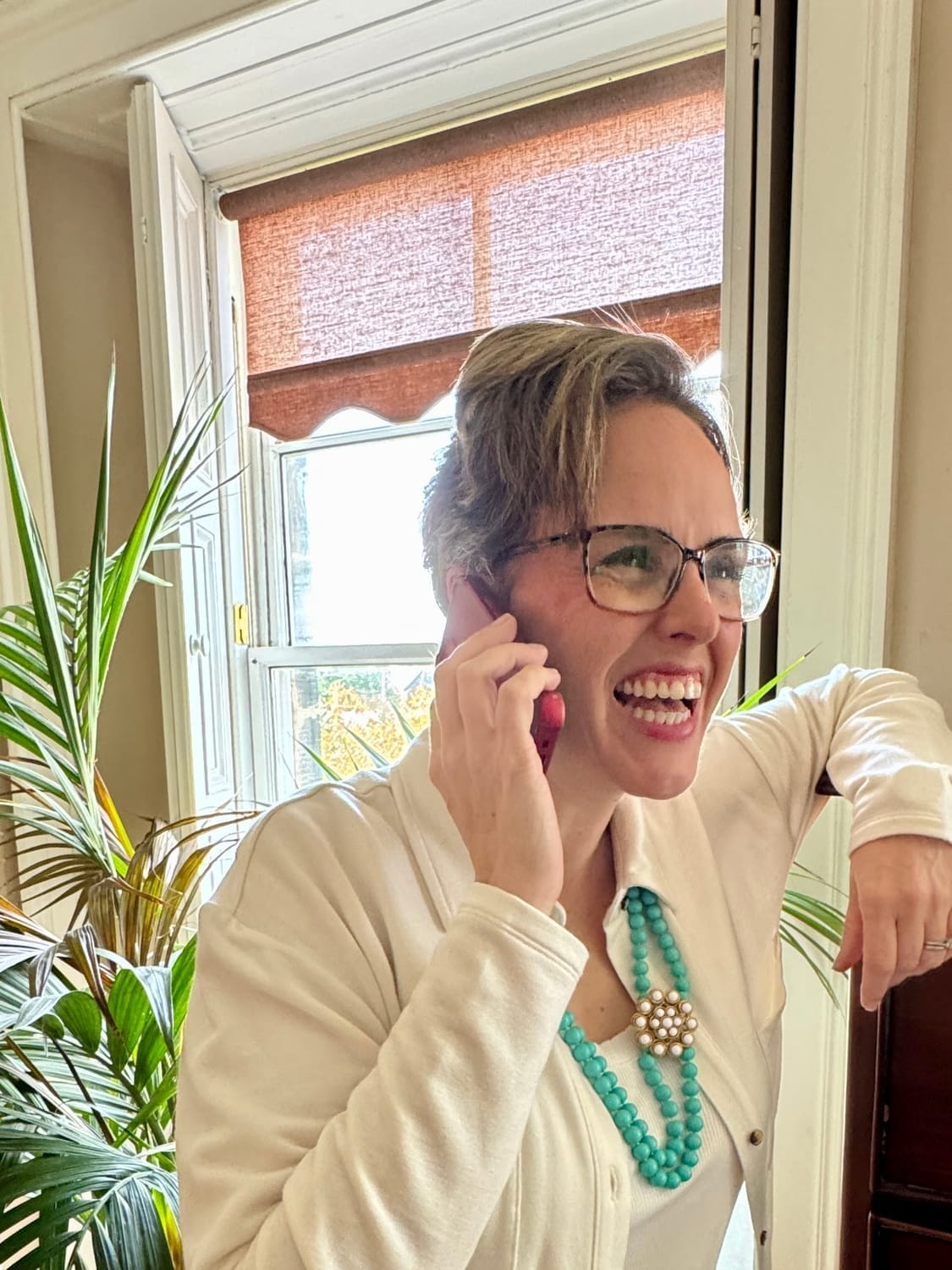
I'm Dr Suzanne Doyle‑Morris and I support professional women working in STEM.
Whether you’re seeking your next promotion, aiming for leadership, or simply looking to make your mark, this blog is created for you.
It's written for the ambitious woman in STEM ready to advance and succeed on her own terms.
Blog Categories
FREE GUIDE
The Women in Tech Promotion Playbook
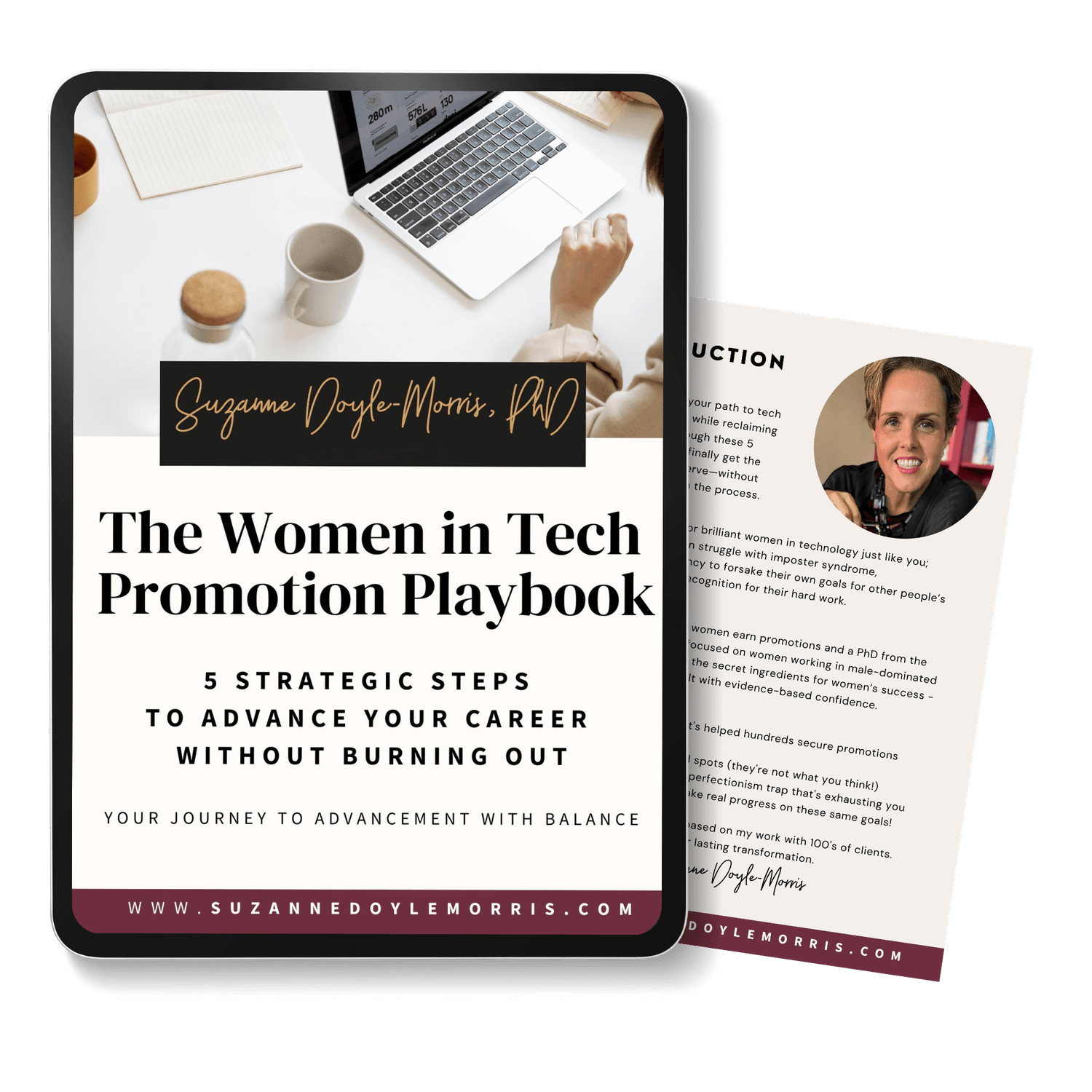
Your roadmap to advancement with balance.
The Women in Tech Promotion Playbook is a practical, evidence-based guide.
It's designed solely for ambitious women in STEM who want to advance their careers without burning out.
Drawing on over 25 years of coaching, research and consultancy, I outline five strategic steps that help women move from being overworked and under-recognised to confident, visible leaders.
Latest on the blog
The Women in Tech Promotion Playbook
Your roadmap to advancement with balance
The Women in Tech Promotion Playbook is a practical, evidence-based guide designed for ambitious women in STEM who want to advance their careers without burning out. Drawing on over 25 years of coaching and research, I outline five strategic steps that help women move from being overworked and under recognised to confident, visible leaders.